


Animals At-A-Glance
Browse through a few of our Canadian species in these "At A Glance" fact sheets. Each page has basic information on some of our Canadian wildlife, with links to detailed, reputable sources such as Hinterland Who's Who and the Government of Canada. Don't see a species you need? Comments or questions? Let us know!
By Type:
Amphibians & Reptiles | Bees | Birds | Fish | Insects | Mammals | Marine Animals | Pollinators | Backyard Wildlife
-
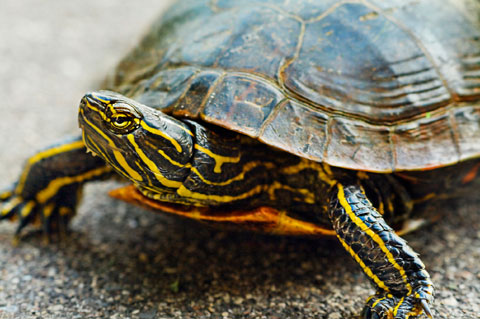
Painted Turtle
2026-06-26
The Painted Turtle has a smooth dark shell with red markings along the outside edge. Its dark skin is adorned with yellow and red strips, most prominently along the head and neck.
-
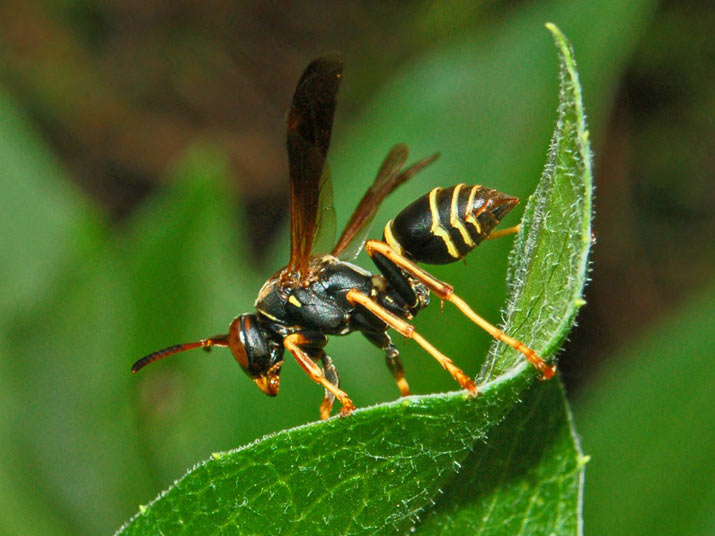
Paper Wasp
2026-06-26
Approximately 17–22 mm. Paper wasps are fairly large. They have long bodies with a broad thorax and abdomen and a tiny, constricted waist. When at rest, their wings fold lengthwise, parallel to the body. The head and thorax are black to brown in colour, while the abdomen is dark with yellow stripes, sometimes with reddish-brown to yellow colouration between the stripes.
-
Pileated Woodpecker
2026-06-26
At an average 18" in length, the pileated is the largest woodpecker in Canada. These colossal birds, with their striking red crest and resemblance to prehistoric pterodactyls in flight, are thought to be the inspiration for the once popular cartoon Woody the Woodpecker. As Woody had his loud laugh, pileated woodpeckers also make noise to match their size. Their drumming, reminiscent of construction machinery, can be heard up to a kilometre away. It is fairly easy to recognize a pileated woodpecker by its large size and the red crest on its head. The body is predominantly black, with thick black and white stripes reaching from the bill to the wing and chest area. The red 'moustache' along the cheek distinguishes males from females.
-
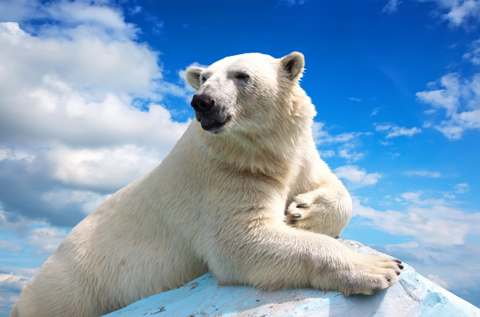
Polar Bear
2026-06-26
Polar bears are one of the most well-known and recognizable Canadian species. These bears are Canada’s largest land carnivore, with adult males weighing up to 800 kilograms (1763 pounds).
-
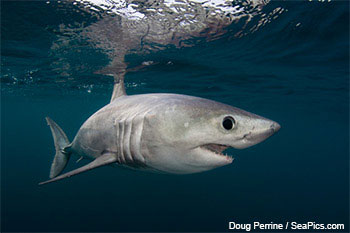
Porbeagle Shark
2026-06-26
This very active swimmer has a powerful streamlined body that reaches a maximum length of approximately 3 m. The back of the Porbeagle Shark is dark grey to bluish black in colour and its belly is white. The head is stout, the snout is pointed and the eyes are large. The mouth has rather large, pointed blade-like teeth with smooth edges that are identical on both jaws. Males reach maturity at age 8 and females at age 13. The Porbeagle Shark's typical life expectancy is estimated to be between 25 and 46 years.
-
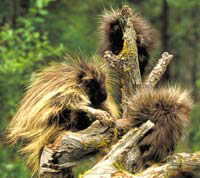
Porcupine
2026-06-26
Porcupines have large, chunky bodies and short legs. This results in their slow, waddling manner. With an average weight of 5.5 kg for males and 4.5 kg for females and a total length ranging from 68 to 100 cm, porcupines are Canada's second largest rodents next to beavers. Porcupine's quills are actually modified hairs. They are longest on the back and tail, reaching lengths of 12.5 cm. Quills on the face are much shorter, approximately 1.2 cm long. Despite their prickly appearance, porcupines have soft undercoats with long guard hairs covering the quills. Their undersides, legs, and muzzles have no quills.
-
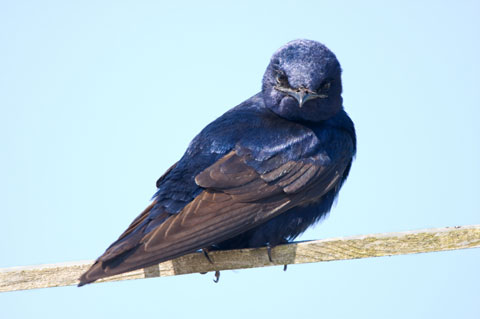
Purple Martin
2026-06-26
The Purple Martin, Progne subis, is a conspicuous bird in many populated areas of North America during spring and summer. Averaging 17 to 20 cm in length and a wing span of 9-41 cm, it is Canada’s largest swallow. The life span of this swallow is one to five years. The Purple Martin resembles other swallows in having a slender body, long wings, and a wide beak. Males show a shiny blue-black coloration on sunny days. Females are lighter in colour, with a pale grey throat and belly.
-
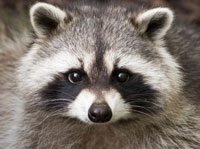
Raccoon
2026-06-26
The common raccoon (Procyon lotor) is probably best known for its mischievous-looking black face mask. Raccoons are usually a grizzled grey in colour with a tail marked by five to 10 alternating black and brown rings. Body coloration can vary from albino, (white) to melanistic (black) or brown. An annual moult, or shedding, of the fur begins in the spring and lasts about three months. A raccoon is about 80 centimetres in length and weighs between 6-8 kilograms.
-
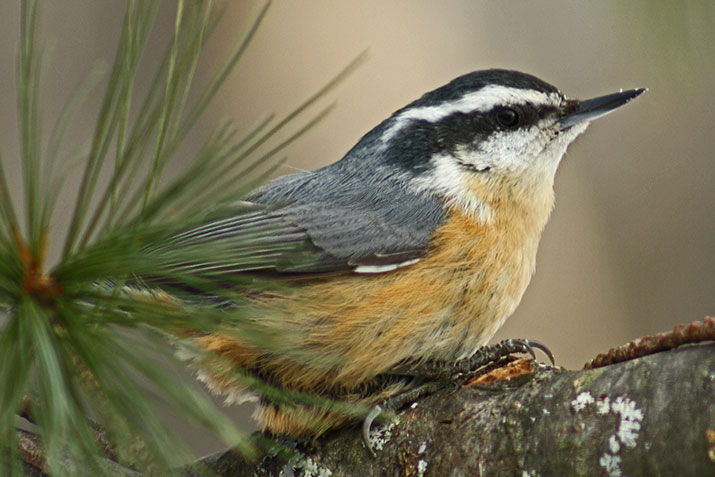
Red-breasted Nuthatch
2026-06-26
Red-breasted Nuthatches are small birds reaching about 4.5 inches in length with a thin black bill and short tail. They have a black and white striped head, white throat, grey back and rust-coloured belly.
-
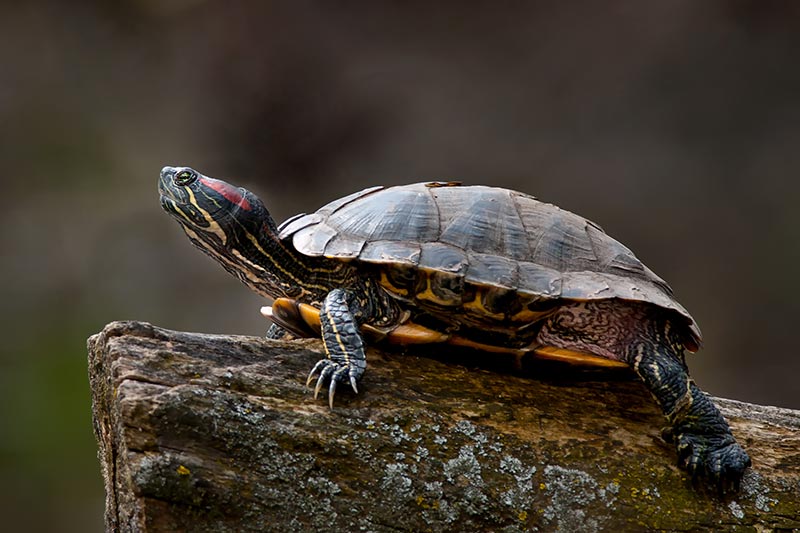
Red-eared Slider
2026-06-26
The Red-eared Slider has a slight ridge, or keel, running down the center of the upper shell. There is usually a wide red stripe on either side of the head, behind the eyes, but this can fade with age.
For more species, visit Hinterland Who's Who, a joint program of the Canadian Wildlife Federation and Environment Canada.

Learn More
- 0
- 1
- 2
- 3
- 4
- 5


