


Terri-Lee Reid
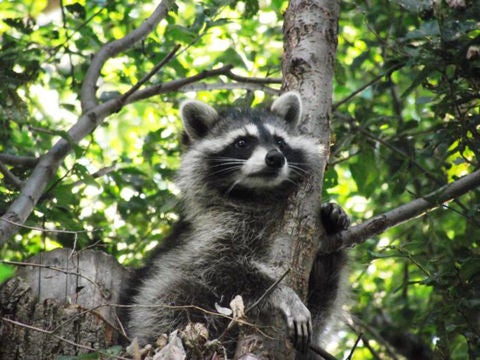
Q. How do I stop wildlife like raccoons from relieving themselves in my backyard?
A. Sounds like you have an animal using your backyard as a latrine. Blech. But there are plenty of precautions you can take to prevent animals, like raccoons, from treating your backyard as a personal outhouse:
- Some people have had good luck laying down plastic garden mesh or a large sheet of painter’s plastic, securing with nails or tape. They apparently don’t like to walk on smooth slippery surfaces.
- If the latrine is on the ground, drench the area with water until it becomes muddy and slippery. Repeat until the raccoons move elsewhere.
- Use dog fur. If you don’t have a dog, a grooming studio should be able to provide you with some. Place in a nylon stocking and attach to a small stick, place around the area.
- Peppermint oil – dab/saturate cotton balls or cotton rags with a few drops of peppermint oil and place in nylon stockings. Be careful with pets and small children as it may be harmful to them.
- Remove any attractants – such as pet food, garbage cans, food remnants on barbeque grills, etc.
Since the raccoons have already started using your backyard as a latrine, you’ll have to clean up after it one way or another. If you plan on cleaning this up yourself there are a number of safety precautions to consider. For instance, raccoons can carry a parasite known as Baylisascaris procyonis. This is a roundworm that lives in the intestines of raccoons. Raccoon droppings can contain a lot of these roundworm eggs, which cannot be seen with the naked eye, and can live in the environment for several years. Although this doesn’t harm raccoons it can cause serious illness in people, though there have been only a few reported human cases. Roundworms can be found in the intestines of other species as well, not just raccoons.
To clean up the area:
- Lightly spray the latrine area with water to prevent the release of dust spores.
- Wear gloves, a facemask, eyewear, and disposable boot covers, avoid getting anything on your hands and clothes.
- Shovel the feces (some recommend wrapping the shovel in a plastic garbage bag ensuring that only the bag comes in contact with the feces-throwing the bag [double bag it first] in the garbage when finished) into a heavy duty plastic garbage bag or a doubled set of garbage bags, seal tightly and put in garbage.
- Use boiling water to disinfect any surfaces the feces came in contact with, including the shovel, deck, roof, or grass area affected.
- When done, throw away the gloves, eyewear and boot covers.
- Wash your clothes with hot water and detergent. Although you wore boot covers it may also be a good idea to rinse your boots with hot water.
- Children and pets should be kept away from the area until a thorough cleaning is completed.
|
Send your wildlife questions to CWF’s conservation researchers, Terri-Lee! Your questions and answers could be featured in a future issue of Wildlife Update! |


