


Terry-Lee Reid
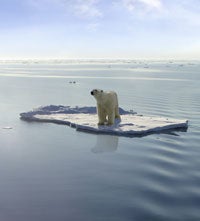
Q. With ice melting due to climate change, is there any way to build artificial platforms to help polar bears survive?
A. This question is best answered by Ian Stirling, a research scientist with the Canadian Wildlife Service. There are essentially two reasons why artificial platforms are not the answer. Stirling says:
“The home range of a polar bear can vary from a few thousand square kilometres up to more than 350,000 square kilometres. That is rather a lot of artificial platform, just to start with. Then there is the aspect of habitat, making a living, and what the seals (their prey) are going to use for breeding and hauling out to bask or molt. Just having a non-melting floating unit — even if it was as large as a few square kilometres — that a bear could stand on would not help it survive for long. If the ice is gone from a substantial area, or the snow melts early because of rain or warm temperatures, then the breeding habitat for ringed seals will be seriously impacted. Put simply, it is just not a practical solution that is either ecologically feasible or economically practical.”


