


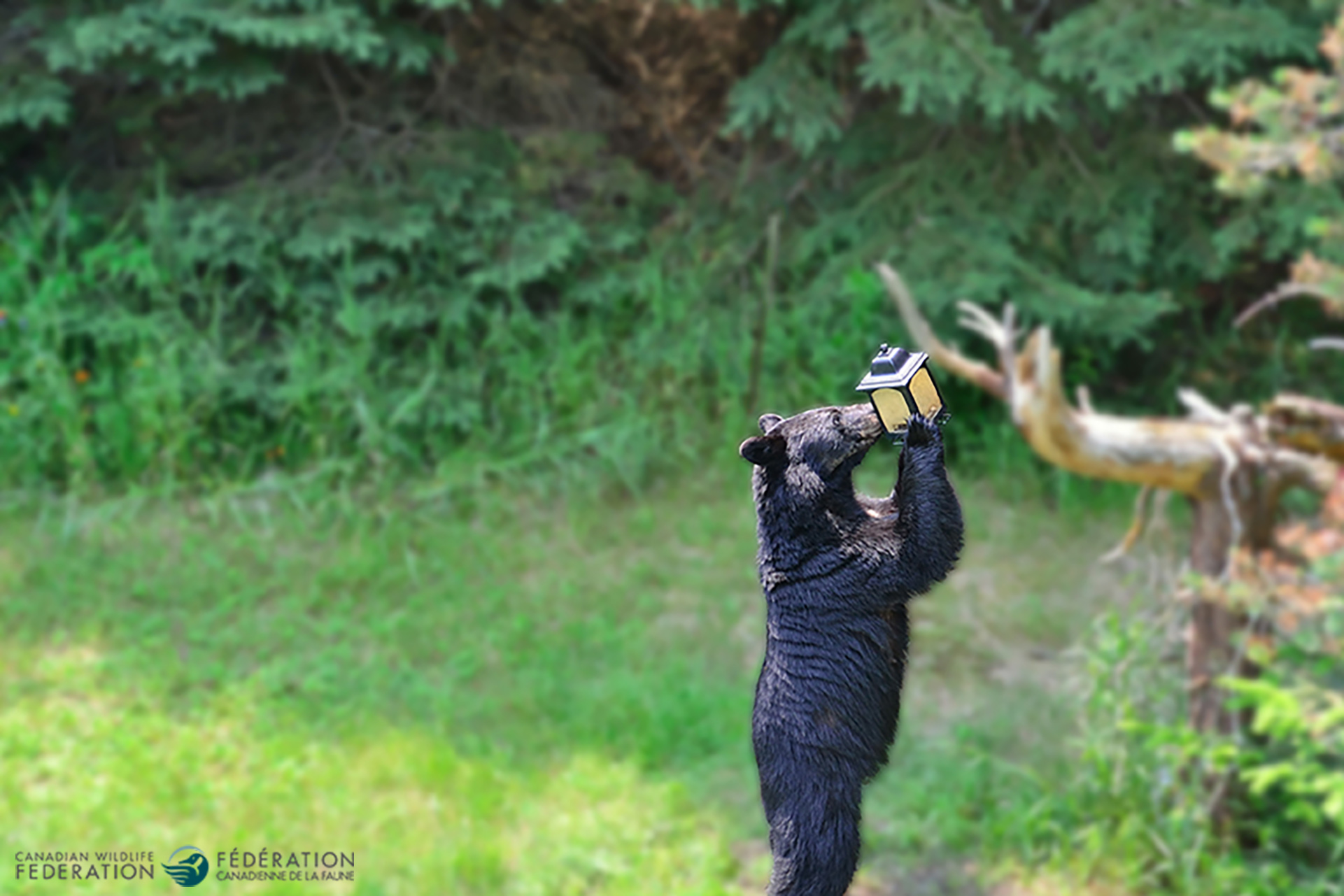
It turns out it’s not that uncommon for bears to be found in suburbia, at least in some areas. A study by UConn wildlife biologists found that housing density is the greatest single factor that determines where bears choose to roam and live. In the study, the highest populations of Black Bears occurred in the state’s outermost suburbs, where the housing density was between two and 20 homes per square mile. Bears are attracted to these areas because they provide areas of hardwood forests and just the right number of homes so that they can easily find a nearby food source such as a bird feeder or a garbage can.
Bears are learning to live in areas that are shared with people. Once they learn about an available food source, they will revisit until the food source is no longer available.

To reduce the chances of any conflicts, be sure to:
- Store your garbage inside until the day of pick up or in bear resistant garbage cans or garbage enclosures. Frequently washing out your garbage and compost containers will eliminate attractive odours.
- If you have beehives, be sure to secure them using the tie-down method.
- Keep your bird feeders out of the reach of bears. It’s suggested that feeders should be at least three metres above the ground and three metres away from anything that bears can climb. Be sure to pick up any spilled seed from the ground.
- Don’t leave any pet food outside.
- Be sure to clean barbeque grills.
- Pick up any ripe and fallen fruit from your trees and shrubs.


