


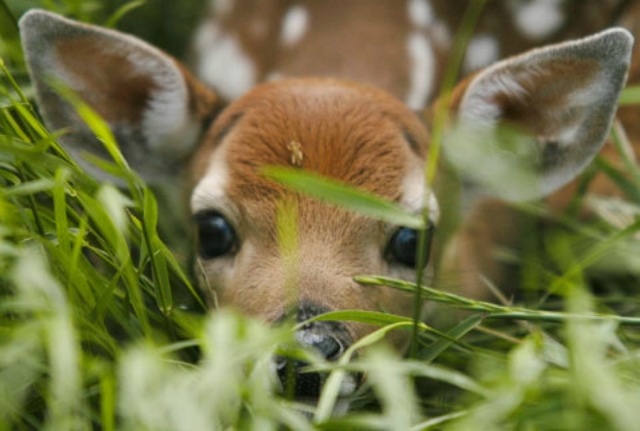
Q. I just saw a fawn on its own. Should I try to save it?
A. It is common for some species to leave their young unattended for extended periods of time, coming back only a few times a day to feed their young or to move them. While this may seem like very poor parenting to us, they actually have very valid reasons for doing this.
Fawns are often left alone, usually among bushes, in tall grasses, in fields, or sometimes even hunkered down in a backyard. They are usually hidden and well-camouflaged. Fawns have very little scent, so the doe stays away so not to lure predators back with her. Does also keep their fawns hidden as fawns aren’t able to keep up with them and escape any danger until they’re about three weeks old.
If you come across a fawn that’s nestled down in a field or in grasses and it looks healthy, it is most likely waiting for its mother to return and should be left alone. If you’re able to come back and check on it in 24 hours, do so. In the meantime, leave it alone and don’t give it any food or water. If it is still lying in the same spot after 24 hours, contact a wildlife rehabilitation centre for advice.
You should also contact a local wildlife rehabilitation centre if the fawn:
- Is consistently vocalizing
- Has visible wounds or blood on them
- Is laying on its side
- Is covered in flies or fly eggs


