


Q. I’ve got a groundhog under my shed. How do I get rid of it?
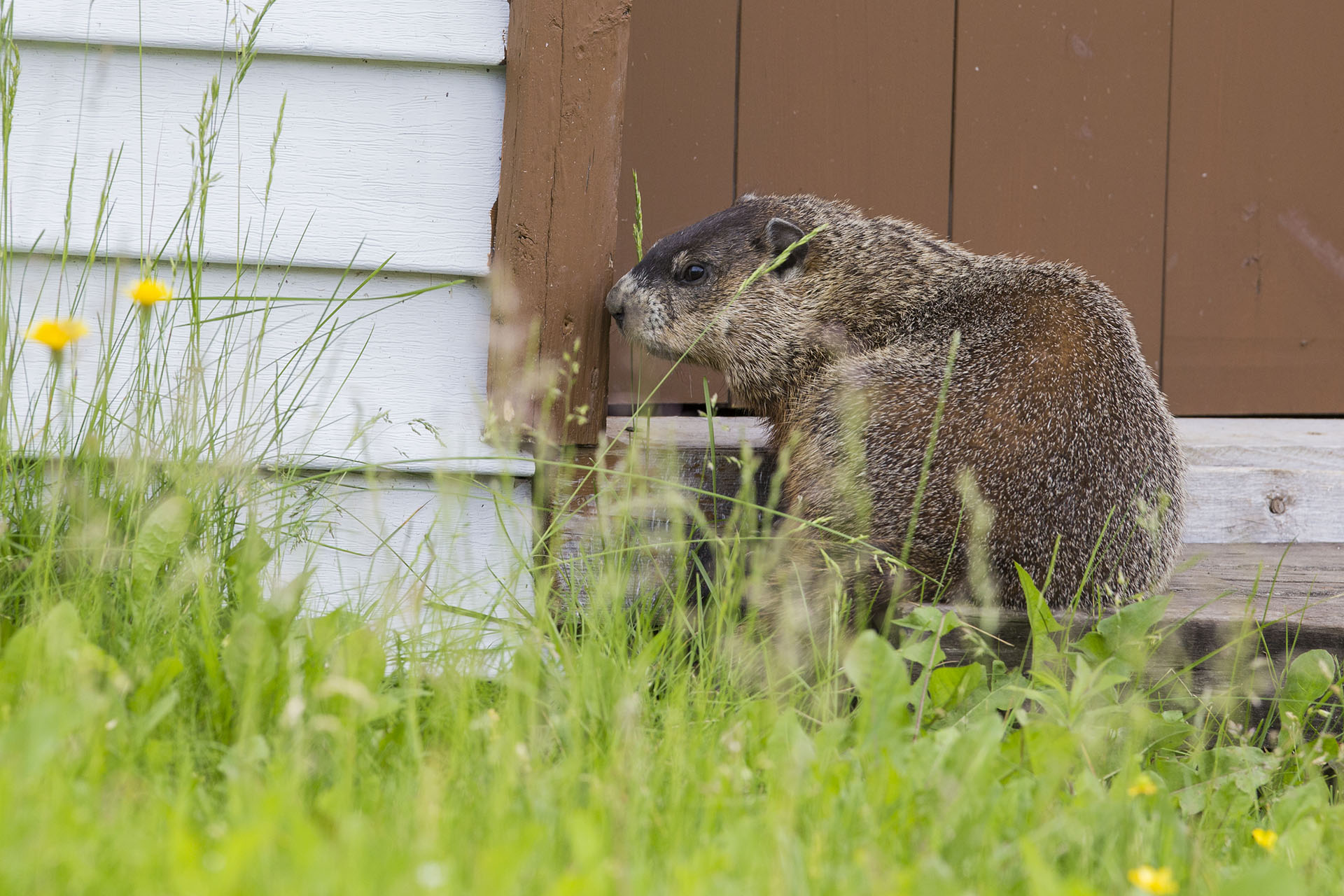
A. It is not uncommon for groundhogs to dig a burrow under a shed. The best way to deal with this is by doing proper animal proofing. However, it’s important to do the proofing at the right time of year!
Because there is a groundhog already living under your shed, there are a couple of things to consider:
- Be careful that you don’t animal proof the groundhog under your shed.
- Be mindful of their birthing season. Groundhogs can give birth to their young from April to June, plus it takes about another six weeks before the young start to come out of their burrow. This is a general timeframe as the birthing season can vary depending on the location and the year. You can always check with a local wildlife rehabilitation centre for the timing in your area. Once the young start coming out of their burrow, you can begin the deterrents that are outlined below.
- Also remember about their hibernation period. Groundhogs can hibernate from late September until March. During this time there won’t be any activity, however you don’t want to risk animal proofing the groundhog under your shed. In the spring, you have a brief period to do your animal proofing before the birthing season begins.
Before you begin your animal proofing, use a few deterrents to encourage the groundhog to move. You can try:
- Dog hair – place some dog hair in a nylon stocking or onion bag and place in and around the hole.
- Use a few rocks to partially fill in the hole. The idea is to create an annoyance for the groundhog instead of completely filling in the hole.
- Smelly human clothing can also be used as a deterrent (for example worn socks, gym clothes).
- Dig a trench around your shed, 30.5 cm (1 foot) deep and 30.5 cm (1 foot) wide out towards you.
- Attach welded wire mesh (16-gauge, one-inch holes will work for groundhogs) to the bottom of the shed and line your trench (30.5 cm deep and then bend it 90 degrees so that the wire mesh comes out towards you 30.5 cm).
- 3. Leave a small opening in the proofing big enough so the groundhog can leave, just in case it is still under the shed. Place some paper towel in the opening. If the paper towel hasn’t moved in 72 hours, it’s a good indicator that the groundhog has left, and you can finish proofing that last spot. For extra assurance, once the opening has been closed, put a piece of food – a piece of carrot, apple or broccoli – inside the wire. If the food has been eaten, the groundhog is likely still under there and will require an opening to get out. If the food hasn’t been eaten, that’s another sign the groundhog is no longer living under your shed. With your animal proofing complete, you should no longer have an issue with groundhogs (and skunks!) getting under your shed and you can fill in your trench with the soil that was removed.
Please note that provinces have regulations surrounding trapping and releasing animals. For some provinces, animals must be released within one kilometre of where they were captured, and they must be released within 24 hours. Check with your provincial wildlife department for rules and regulations for your province.
If you have any concerns or questions regarding the groundhog under your shed, always consult with your local wildlife rehabilitation centre.


