

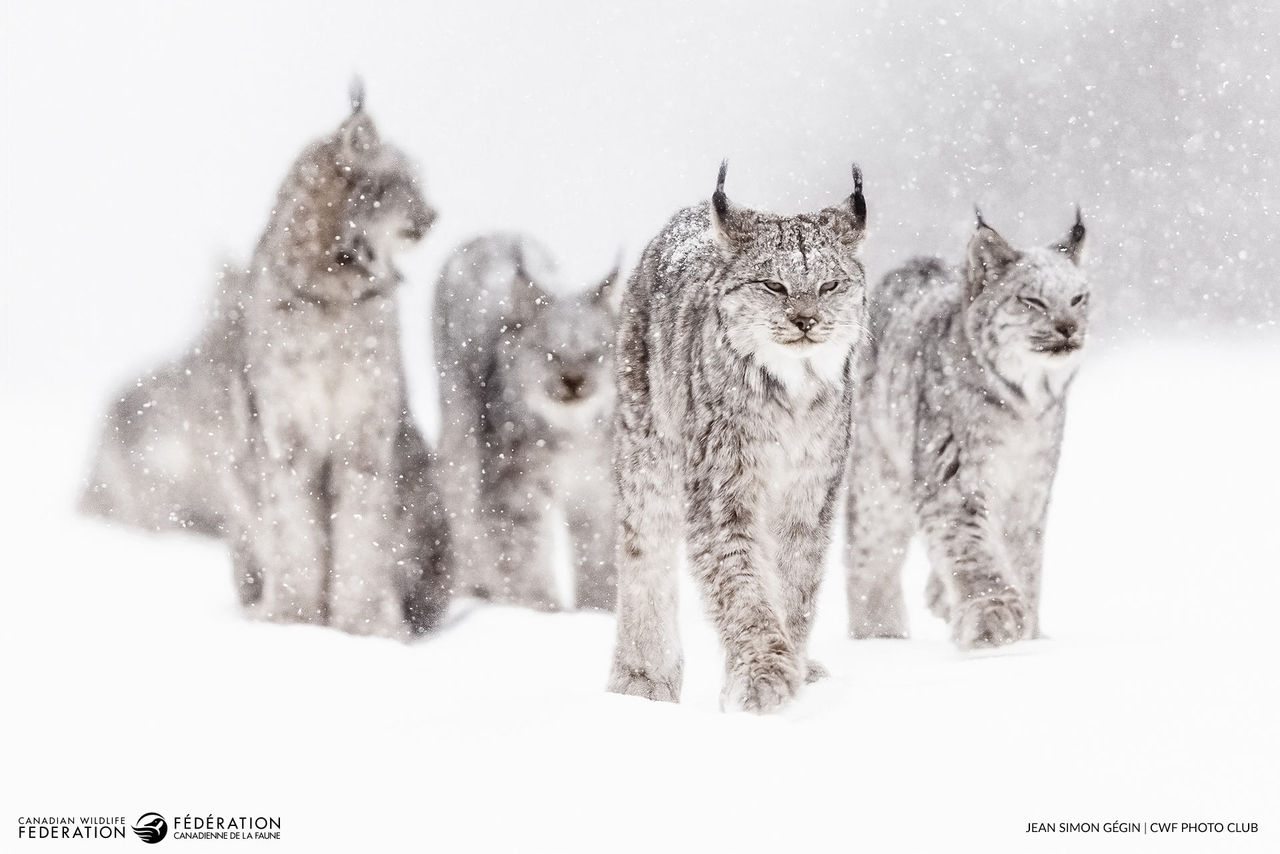
Q. There was a Canada Lynx sighting in my neighbourhood. What can I do to protect my family and my pets?
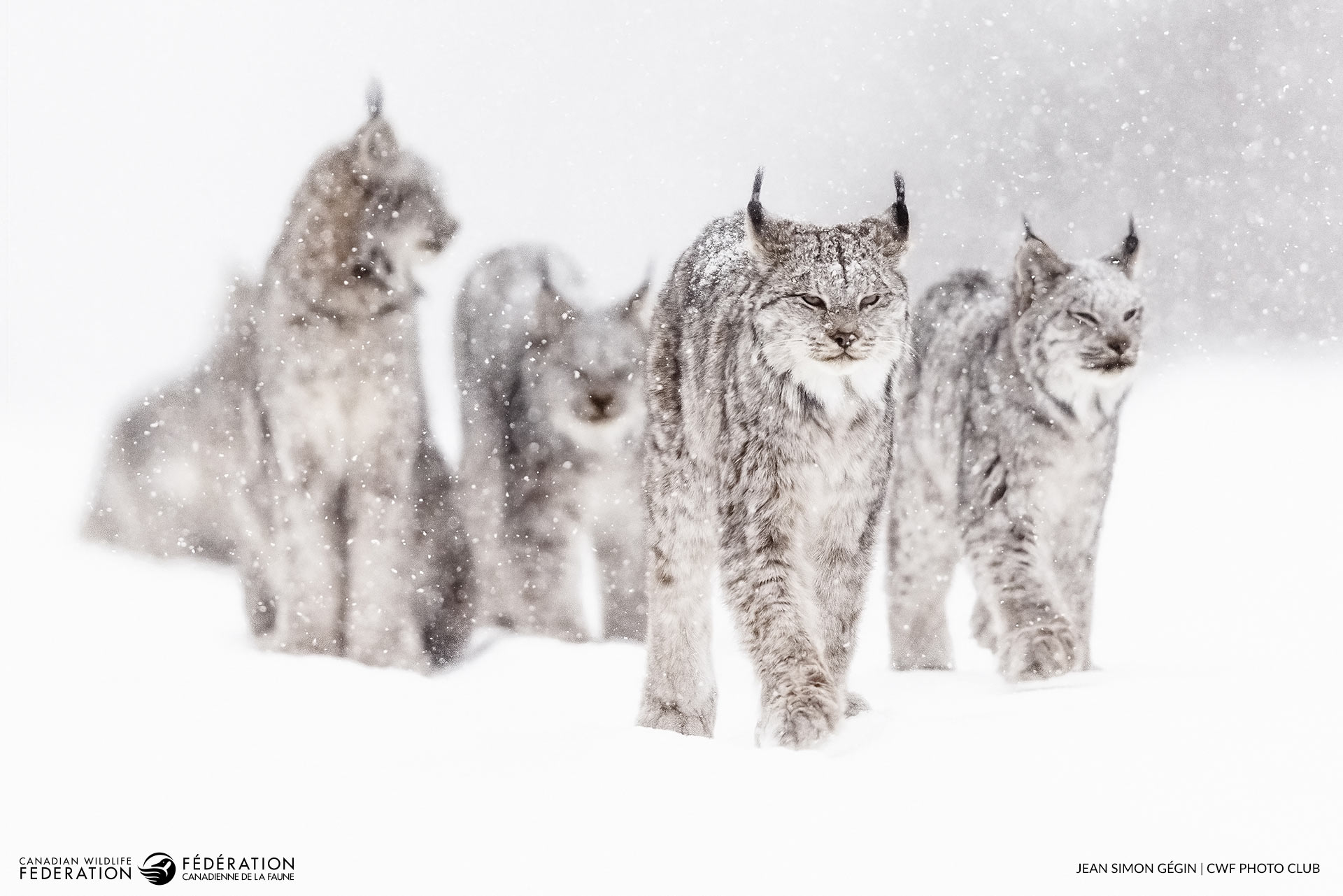
A. Canada Lynx are secretive animals that tend to be most active at night. Snowshoe Hares make up the bulk of their diet, but it is supplemented with mice, voles, squirrels, grouse, foxes and even carrion or dead animals.
If a lynx is spotted in your neighbourhood, you can make your property as uninviting as possible with these tips:
- Do not leave garbage outside, not even the night before your garbage is being picked up.
- Do wash your garbage containers frequently, including the lids, as well as your recycling bins to minimize food odours.
- Do stop putting certain foods (such as fish and other meat) in your compost while the lynx is around.
- Don’t feed pets outside.
- Do temporarily take down bird feeders and bird baths so lynx are not attracted to the birds.
- Do use motion sensor lights to brighten walkways, driveways and paths around your house.
- Do keep chickens, rabbits, cats, dogs and other animals in a secure enclosure with a secure roof when outside.
If you do come across a lynx:
- Try to appear as large as you can.
- Do not turn your back to the lynx or take your eyes off it.
- Look towards the lynx and firmly talk while slowly backing away. If the lynx does not leave, try and make yourself look larger and more intimidating by waving your arms in the air and shouting.
- Be sure to leave the lynx an escape route.
- Never run and never move towards the lynx.
- If you’re in a group, stay in the group.
Other actions to consider:
- Keep an eye out for signs of the lynx such as droppings and tracks.
- It is best to stay in groups but if you are hiking by yourself, be sure to make noise (bring along a radio, whistle, sing or talk to yourself) and let someone know where you are going.
- If you are walking with a dog, be sure to keep it on a leash so the dog doesn’t trigger aggressive behaviour from the lynx.
- From the safety of your home, snap a photo of the lynx and upload it using the iNaturalist app or at iNaturalist.ca. This can help the community and researchers alike know about the occurrence and track this type of behaviour over the long term.


