

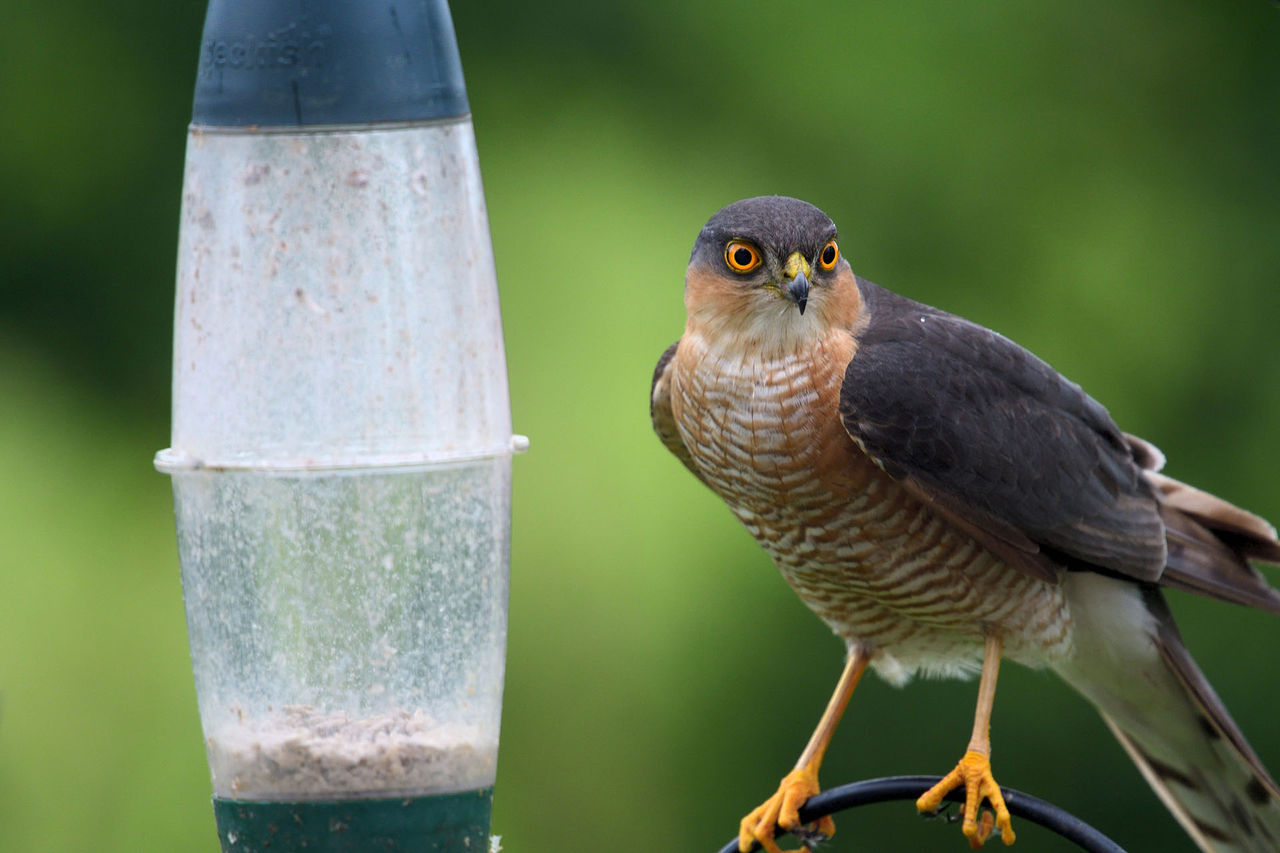
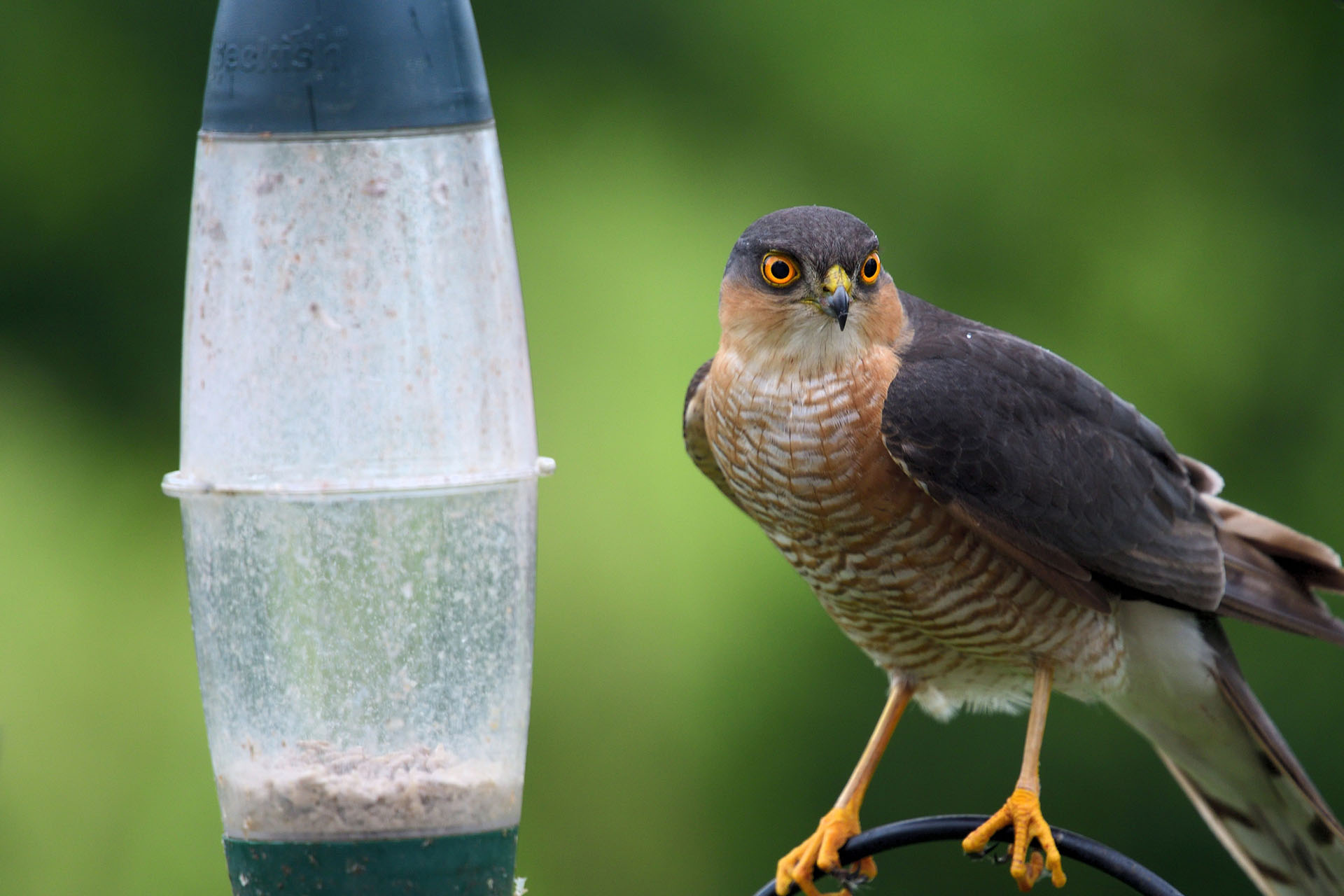
While some people may welcome a hawk visiting their property to watch nature unfold right in front of them, there are others who may not share this same sentiment and would prefer to see a frequenting hawk frequent somewhere else!
If you fall into the latter category hopefully some of the suggestions below will help!
Take Down Your Feeders Temporarily
Some recommend removing bird feeders temporarily. This will give time for the songbirds to disperse and for the hawk to realize it needs to find another food source. Studies show that birds only get about 25 per cent of their daily food from bird feeders with the remaining 75 per cent coming from natural sources. Therefore, your birds should be fine during this temporary hiatus. After a week or two and with no signs of the hawk, you can put your feeders back up.
Songbirds should make their way to your feeder without drawing attention to any birds of prey.
Provide Cover
By having brush piles, trees, and shrubs, especially conifers, you’ll be providing songbirds with safe hiding places. Placing feeders about three metres from protective cover not only offers protection from hawks but from cats too! Leaving bird feeders out in the open makes songbirds easy targets for predators. Hanging feeders under an awning can also provide some protective cover.
Opt for a Hanging Platform Feeder
If you feed birds on the ground, you may want to consider using a hanging platform feeder instead. Feeding birds on the ground makes them easier prey. To keep seeds from spilling on the ground, try installing a tray below feeders and choose birdseed that doesn’t include fillers, such as red millet and oats. Most birds are not attracted to these and they often get thrown on the ground. Be sure to download our hand-out on bird feeding to find out which feeder foods are preferred by common feeder birds!


