

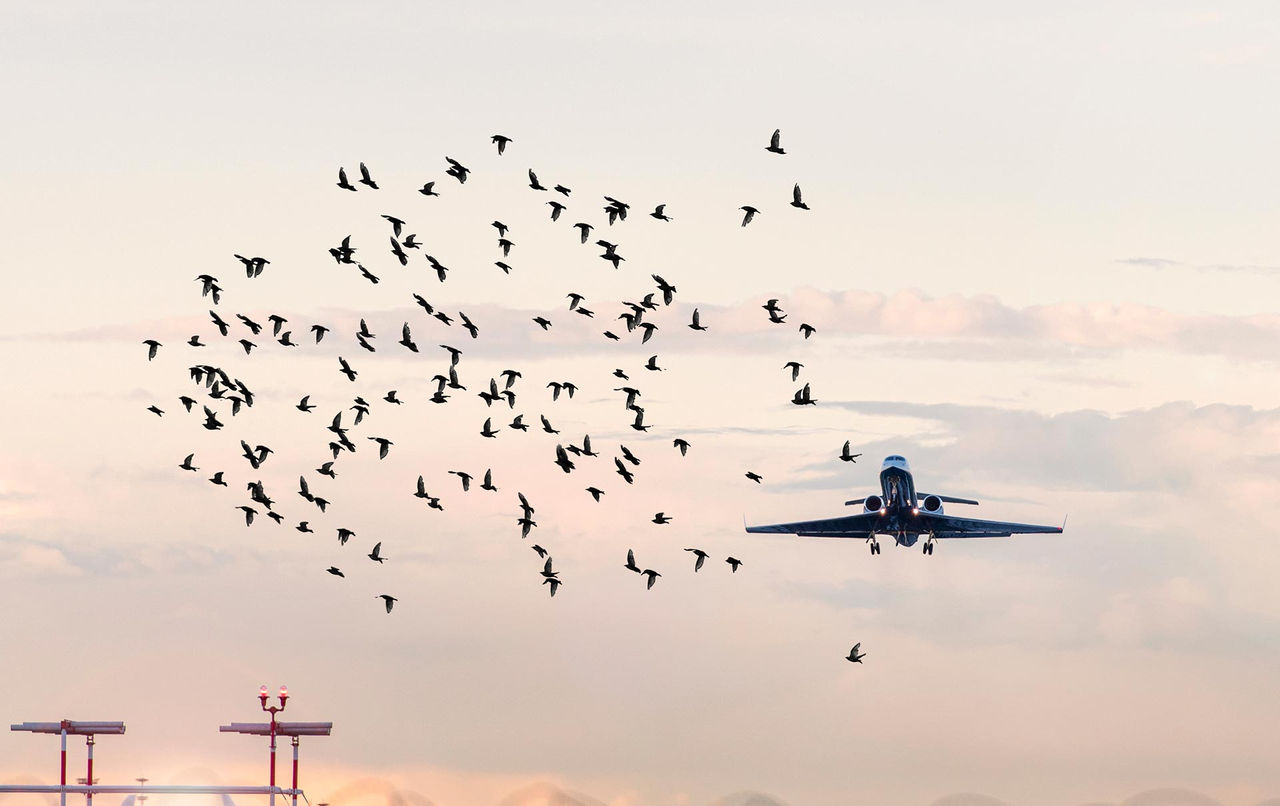
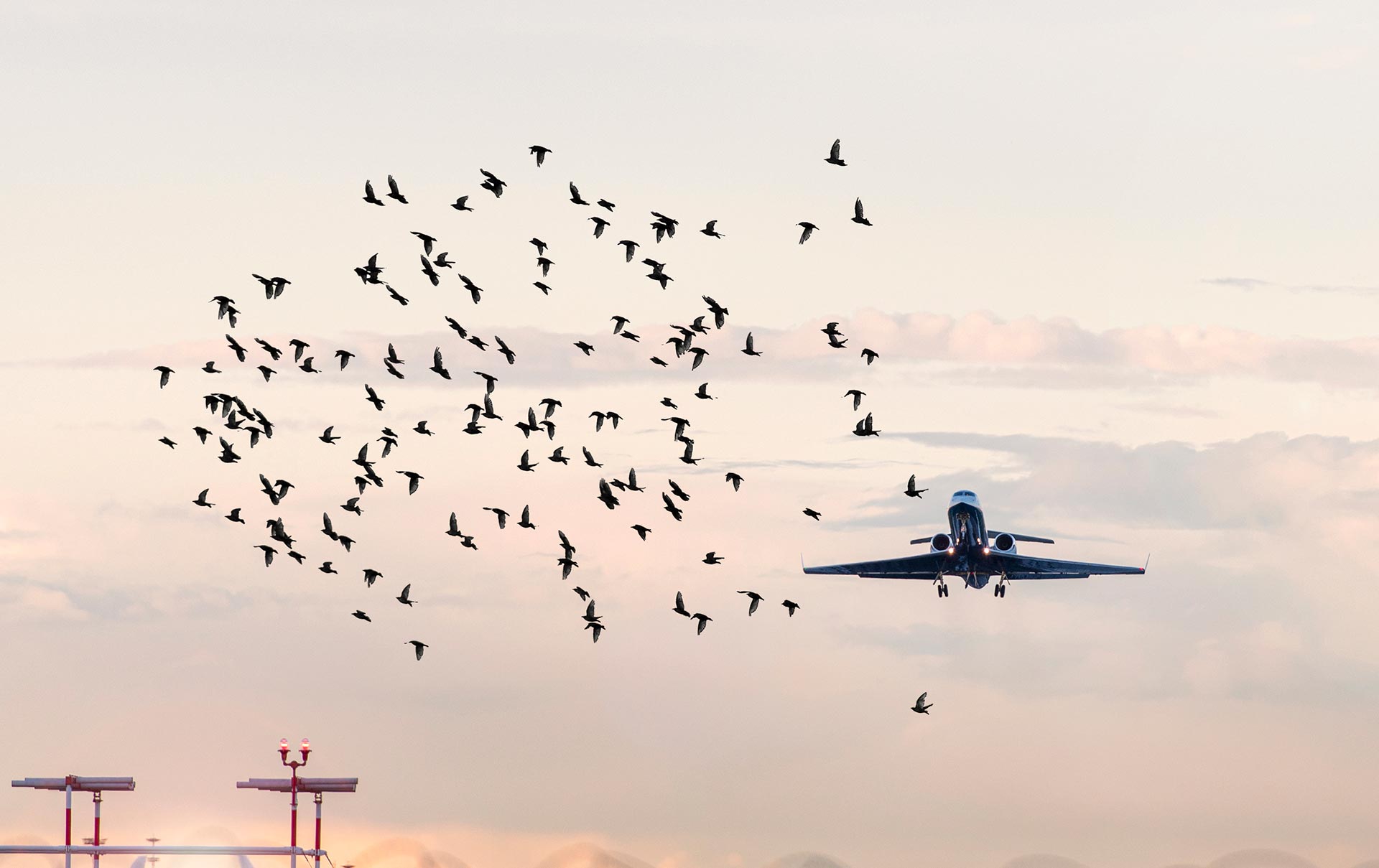
Q. Flying back to Vancouver, we hit a bird while landing. Why didn’t it just get out of the way?
A. The way a bird reacts to an airplane varies depending on several factors including:
- Weather
- Time of year
- The species of bird
- Age of the bird, and
- How familiar the bird is with airplanes and airports
Bird strikes can occur at any time but they are more likely to happen during the stages of takeoff and landing. As such, approximately 90 per cent of bird strikes take place around airports. While there are many species that have unfortunately been involved in bird strikes, there are some species that seem to have an increased chance of being struck. These include gulls, raptors, starlings and blackbirds, waterfowl, pigeons and doves, as well as Horned Larks, Lapland Longspurs and Snow Buntings.
For birds that hang around airports, they may not recognize airplanes as a threat and are therefore not overly alarmed by them. It’s like they have grown accustomed to them. In fact, it isn’t that uncommon to see birds feeding along busy runways, not bothered by any associated noise and movements.
Migrating birds, which may not be as used to airplanes and airports, can be very unpredictable in how they react. While some may ignore the plane, others may respond by what is referred to as panic flight. For instance, shorebirds and starlings may gather into dense flocks and move erratically. Others will try and move out of the way of the plane. Gulls commonly try to out-fly the plane and eagles and hawks sometimes try to attack the plane. There are studies that have shown that some birds recognize planes as immobile entities and will slowly move out of their way. It’s apparently common for some species of waterfowl to fold their wings and dive when they see an airplane.
With so much uncertainty there is one thing that is certain – how a bird reacts to an airplane can be very unpredictable!
Got a wildlife question? Send it to youasked@cwf-fcf.org


