


SCIENTIFIC NAME
Parthenocissus quinquefolia
DESCRIPTION
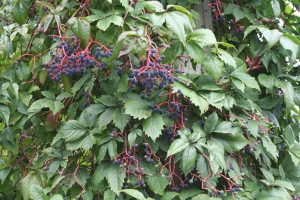
This vine has a woody stem and leaves composed of five leaflets, arranged palmately — like fingers that spread out from the palm of your hand. Its white flowers bloom by the end of the summer producing dark yet bright blue fruit in the early fall. This is in striking contrast to the brilliant red of its fall leaves.
RANGE
Virginia creeper, a member of the grape family, is commonly seen around its native region of Ontario and Quebec, in woods and gardens, growing up trees and buildings as well as across areas as a ground cover.
HABITAT
This plant loves sun and a place to climb, but seems very tolerant of shady areas and can thrive without support. Although it prefers moist soils, Virginia creeper can be grown in drier conditions.
DIET
BEHAVIOUR
undefinedPRIMARY ECOSYSTEM ROLES
The shelter afforded by Virginia creeper provides places for warblers and other songbirds to nest and gain protection from predators and harsh weather. It also shelters toads and insects, which in turn are food for many birds and mammals. Virginia creeper also offers food in the form of pollen for bees that pollinate its flowers and berries for songbirds, skunks and chipmunks. Deer are known to occasionally munch on the leaves.

Article: Sarah Coulber
Images: Sarah and Claire Coulber
Virginia Creeper (Parthenocissus quinquefolia)

Vines add visual appeal and habitat for wildlife. They can even be used to camouflage less pleasing areas of the garden, such as composters, concrete walls or ugly fencing. All it takes is a simple trellis, fence, string or sometimes nothing at all to support these climbing plants.
There are many vines native to Canada and, despite their shared habit of climbing up and gaining support from objects, they vary greatly in shape, texture, colour and other characteristics. You can find vines in many different plant families. Virginia creeper, a member of the grape family, is commonly seen around its native region of Ontario and Quebec, in woods and gardens, growing up trees and buildings as well as across areas as a ground cover.
What’s in a name?
The Latin “quinquefolia” refers to the plant having five leaflets in each leaf. The common name says it all — Virginia creeper will creep slowly and steadily along whatever you put in its path.
Uses

Virginia creeper is reputed to have been used by humans to alleviate jaundice, headaches, rheumatism, bunions, respiratory ailments and skin irritations such as poison sumac rash. (Caution: We are not recommending the use of these plants for medicinal or food purposes. Many plants are poisonous or harmful if eaten or used externally. The information on food and medicinal value is only added for interest. This information has been gathered from books and its accuracy has not been tested.)
Propagation

Care
This plant loves sun and a place to climb, but seems very tolerant of shady areas and can thrive without support. Although it prefers moist soils, Virginia creeper can be grown in drier conditions. It can be an aggressive spreader but is easily kept in check if you cut it back once a year.
Growing native plants can be time- and money-saving and is rewarding to both us and our wildlife neighbours. To learn more about growing native plants in your garden, visit http://cwf-fcf.org/en/resources/online-articles/news/habitat/gardening-with-native-canadian-plants.html.


