


SCIENTIFIC NAME
Apalone spinifera
OTHER COMMON NAMES
Pancake Turtle
DESCRIPTION
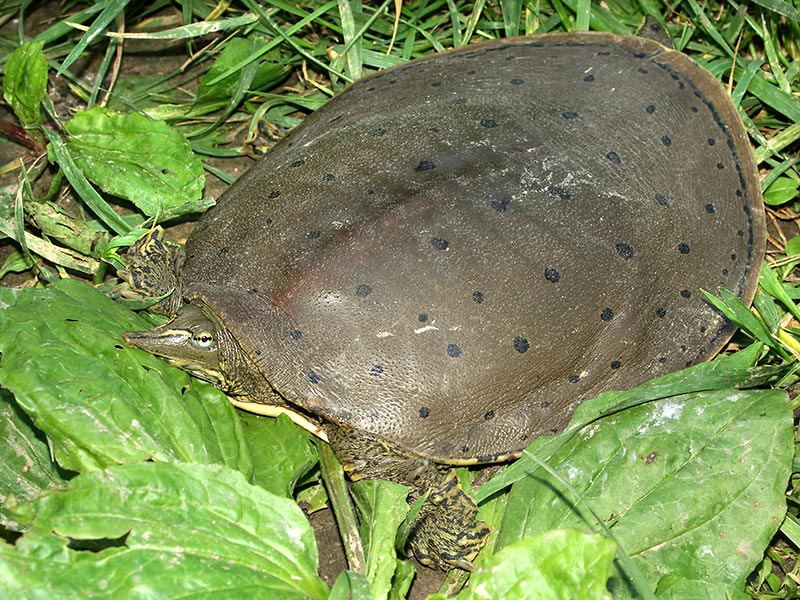
The Spiny Softshell Turtle has a flat leathery shell that is a greenish-brown. It has a long neck and a tubular nose.
PHOTO GALLERY
 |  |  |
RANGE
A small part of southern Ontario and southern Quebec.
HABITAT
Spiny Softshell Turtles live in rivers or lakes with abundant aquatic vegetation and sandy shorelines. Females nest close to water in open areas in sand or soil. In winter, Spiny Softshell Turtles hibernate under water on the bottoms of lakes and rivers.
BEHAVIOUR
Spiny Softshell Turtles are primarily aquatic but they will bask on shorelines, rocks or logs. A Spiny Softshell Turtle can move more than 20 km along a river over the course of the active season. They do not reach maturity until about 12 years. Female Spiny Softshell Turtles lay one clutch of six to 36 eggs in June. Unlike many species of turtles, the sex of the hatchlings is determined by genetics, not the temperature of the nest. The hatchlings emerge in late summer or early fall.
Adult Size: 12-24 cm for males, 18-43 cm for females
STATUS
Endangered (Federal)
THREATS AND/OR WHAT YOU CAN DO
Shoreline development along lakes and rivers has been a major threat to Spiny Softshell Turtles. Injury or mortality can occur from being hit by boat propellers. High rates of nest predation from raccoons is a threat in many areas.
NOTES
Did you know? Spiny Softshell Turtles will bury themselves in the bottom of shallow areas of waterbodies and then extend their nose above water to breathe, just like using a snorkel.

Learn More
- 0


