


SCIENTIFIC NAME
Chrysemys picta
DESCRIPTION
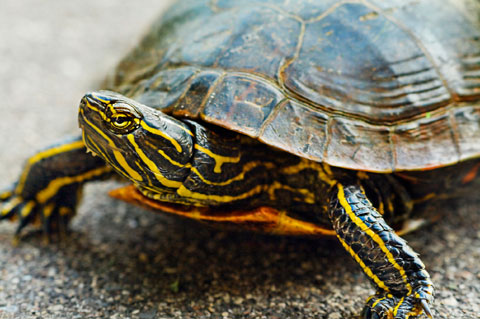
The Painted Turtle has a smooth dark shell with red markings along the outside edge. Its dark skin is adorned with yellow and red strips, most prominently along the head and neck.
PHOTO GALLERY
 | |  |
 |  |  |
 |  |
RANGE
Southern portions of provinces from British Columbia to Nova Scotia, but is absent from Prince Edward Island and Newfoundland
HABITAT
Painted Turtles live in shallow lakes, ponds, creeks and wetlands, preferring waterbodies with soft muddy bottoms and an abundance of aquatic vegetation. Females nest in open areas in sand, soil or gravel. In winter, Painted Turtles hibernate under water on the bottoms of wetlands.
BEHAVIOUR
Painted Turtles bask extensively in the spring and even on the hottest days in summer. Females do not reach maturity until they are 12 to 15 years of age, whereas males reach maturity around seven to 10 years old. Female Painted Turtles lay one or two clutches of three to 20 eggs on land. The sex of the hatchlings is determined by the temperature of the nest during incubation. The hatchlings emerge in late summer or early fall or may overwinter in the nest cavity.
Adult Size: 11-26 cm
STATUS
Threatened (British Columbia: Pacific Coast Population of Western subspecies)
Special Concern (British Columbia: Intermountain Population of Western subspecies; Ontario and areas east: Midland and Eastern subspecies)
Not at Risk (Alberta to northwestern Ontario, Western subspecies)
THREATS AND/OR WHAT YOU CAN DO
Road mortality is a major threat to this species and each year hundreds are killed on roads in Canada. The destruction of wetlands also poses a threat to Painted Turtles. High rates of nest predation by raccoons can pose a threat in some areas.
NOTES
Did you know? Painted Turtle males have long front claws that they use to court females by “tickling” their cheeks.

Learn More

- 0
- 1


